
6 Health Benefits of Kayaking That Surprise Everyone
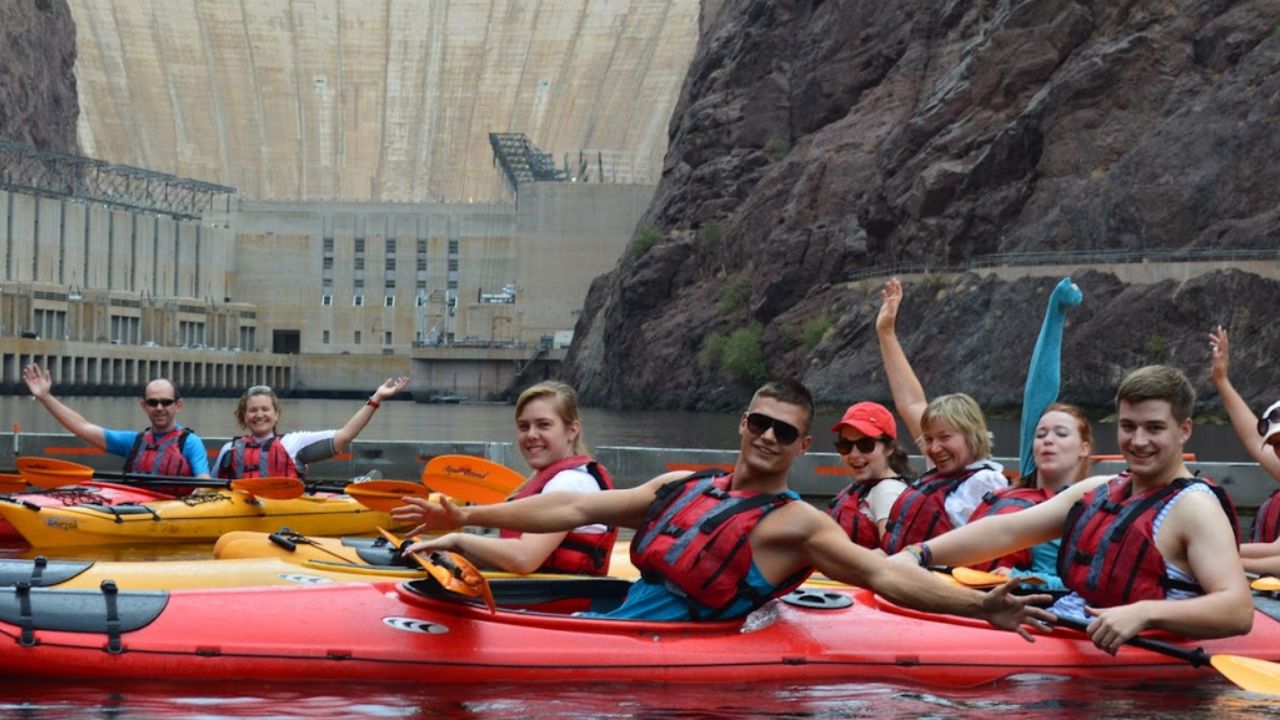
Kayaking is good exercise in ways many people don’t expect. It’s more than just sitting on water and paddling. It works your body, calms your mind, and gives you a way to enjoy time outdoors.
If you have ever wondered, “Is kayaking good exercise?” the answer is yes. It engages many muscle groups, burns calories, and puts you in nature. It works both your body and your mind.
In this blog, we will share 6 health benefits of this thrilling sport.
1. Kayaking Is Great Cardio Without the Pain
Kayaking is a low-impact yet effective cardio. But the activity comes without the traditional pain of intense cardio workouts. Kayaking doubles up as a whole-body aerobic workout. It improves blood circulation and strengthens the heart.
Here’s how it is an efficient cardio exercise
Continuous Aerobic Activity
Paddling forces you to do a sustained, repetitive motion with your hands. This keeps your heart rate elevated. It advances your heart stamina.
Full-Body Engagement
Kayaking primarily targets the upper body. However, when you do it with the right form, it also involves your core. This increases the total energy that you expend.
Resistance Training
Paddling against water provides natural resistance. This strengthens the muscles. At the same time, it also works your heart.
High Caloric Burn
Depending on the intensity with which you paddle, you can burn up to 240 to 500 calories. This is the calorie expenditure that occurs in one hour.
Improved Heart Health
Regular kayaking helps lower resting heart rate. It decreases blood pressure and regulates cholesterol.
Low Impact
It provides intense cardio. However, this happens without the joint wear that runners so often experience.
2. Kayaking Works Lots of Muscles
Kayaking involves over 12 major muscle groups. Thus, it properly strengthens your upper body and core.
Key muscle groups worked are:
Back and Shoulders
The lats (latissimus dorsi) and deltoids are the two most used muscles in this activity. You use them during the forward stroke.
Arms
Biceps and triceps are always engaged. They are used in pushing and pulling the paddle.
Core/Torso
Abdominals and obliques are used for rotation. You also engage them in stability and power.
Chest
In the chest, kayaking activates pectoral muscles. These muscles are fired up more when you paddle with the right technique.
Legs
Quadriceps, hamstrings, and calves are lower-body muscles used in kayaking. You use them for bracing and stabilizing. This is especially true in whitewater or sea kayaking.
Why It’s Effective:
High Repetition
A mile of kayaking can involve almost 500 strokes. Thus, it provides high-volume endurance training.
Resistance
The water provides natural resistance. This tones muscles.
Full-Body Motion
Proper technique uses the rotation of the torso. It does not just engage your arms. Thus, kayaking offers a comprehensive workout.
3. Boosts Endurance in a Fun Way
Kayaking improves endurance through a sustained, full-body paddling motion. The nature-immersed activity enhances endurance in a fun way.
Below are the key factors that are involved.
Full-Body Engagement
Kayaking demands constant, rhythmic movements from the core and upper body. This leads to building endurance when done over a period of time.
Cardiovascular Conditioning
Paddling increases the heart rate. This allows for sustained, high-endurance workouts.
Natural Resistance Training
The water’s resistance acts as natural weight training. It strengthens the muscles. Simultaneously, it also improves your stamina.
Interval Training Potential
Paddlers can easily vary intensity. You can switch between high-speed paddling and relaxed, steady strokes. This builds your aerobic capacity.
Mental Escape
Kayaking happens outdoors. So, it naturally lowers stress. The sport also provides a therapeutic experience. Thus, it makes the endurance effort feel less intense.
4. Kayaking Helps Regulate Weight
Have you been trying to shed extra weight? Kayaking will be the best sport choice for you. Paddling for an hour on the water can help you slash 400 calories! That’s not a small number. If you take it up a level and do three hours of the sport, your calorie burn count increases. You can burn over 1000 calories in this case.
For those who don’t like traditional forms of exercises, kayaking is a great option. Not only does it help with weight loss, but it’s also a thrilling activity. No longer do you have to see losing weight as a hurdle. Kayaking can make weight loss a lot more effortless.
5. Improves Joint Health and Flexibility
Kayaking enhances your joint health and flexibility. This stems from it being a low-impact, entire body workout. When done regularly, it improves your mobility.
Key benefits for joint health and flexibility are:
Low-Impact Exercise
Kayaking is gentle on load bearing joints. These include the knees and hips. So, it is suited for those with knee pain. Even arthritis patients can do it under proper supervision.
Improved Range of Motion
The paddling motion promotes optimal mobility in the upper body. This is especially so in the shoulders and torso.
Muscle Support
It builds strength in the core, back, and arms. They support the spine. Paddling thus optimizes your overall stability.
Reduced Joint Stiffness
Regular paddling preserves flexibility. It prevents joint stiffness.
6. Clearer Mind and Reduced Stress
Being on calm water is soothing. Kayaking slows your thoughts down and reduces stress.
Here’s how it helps reduce stress and increase mental clarity.
Mindfulness and Meditation
The predictive motion of paddling doubles up as a sort of moving meditation. This quietens your mind. It pushes cortisol levels low. Your awareness comes to the present moment.
Natural Endorphin Release
Physical activity during kayaking releases neurotransmitters. These include endorphins, serotonin, and dopamine. They act as natural mood boosters. This, in turn, lowers your stress and anxiety.
Connection with Nature
Being in serene, scenic settings allows you to detach from your daily worries. It provides a soothing “sensory symphony” of water and nature.
Cognitive Engagement
Navigating waters stimulates cognitive flexibility and problem-solving. It helps in altering negative thought cycles.
Improved Sleep
The physical, full-body workout leads to better sleep quality. This lowers stress levels.
Kayaking for Your Back
Some people wonder, “Is kayaking good for your back?” Yes, especially when done with good technique. Engaging the core and back muscles can improve posture and reduce pain over time. Strengthening these muscles helps support your spine during daily activities and exercise. Of course, if you have existing back problems, start slow and adjust technique as needed.
Regular paddling often reduces back tension because the muscles that support your posture become stronger. This benefit is one of the reasons kayaking is recommended for many people new to exercise.
Try a Guided Experience for Maximum Benefits
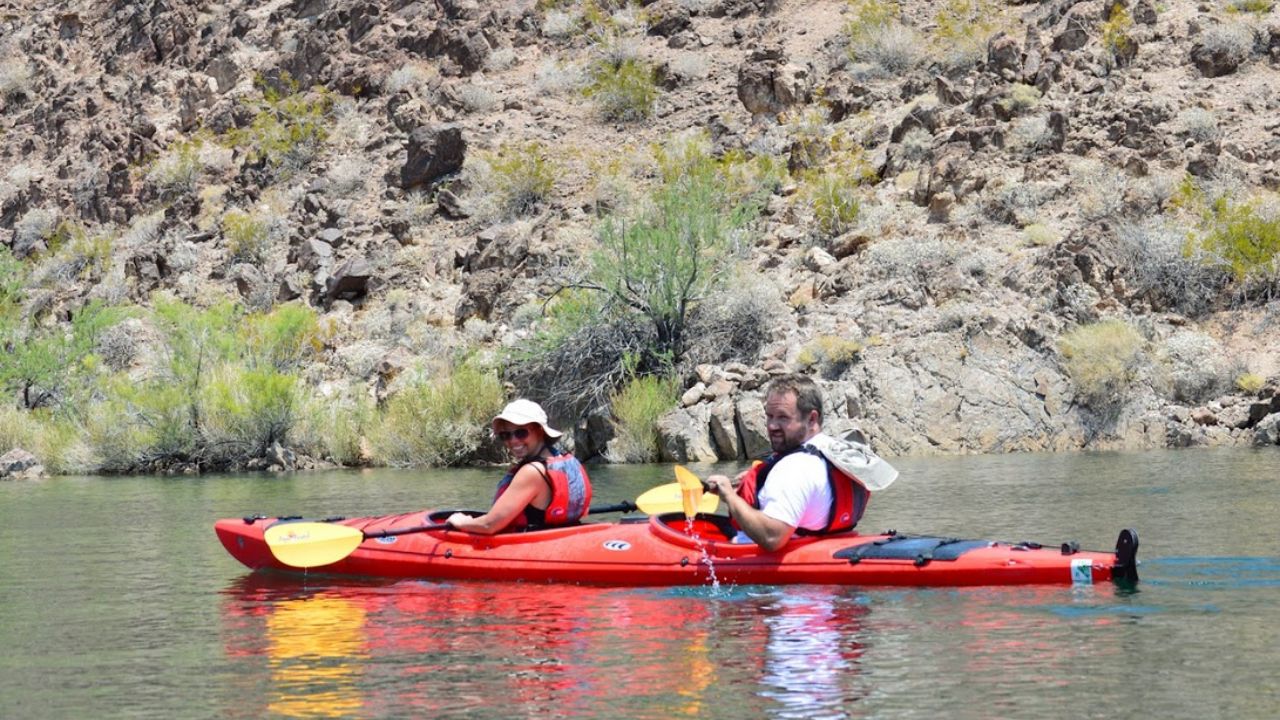
If you want to feel how strong kayaking can be as exercise, this tour shows it fast.
The Kayak Hoover Dam & Hot Springs Hike by Evolution Expeditions is a full-day workout in a real outdoor setting.
The day starts at the base of the Hoover Dam. Just reaching the launch point requires movement. The scale of the dam sets the tone. This is not a casual paddle.
Guests kayak twelve miles down the Colorado River. The water is mostly flat, but the distance adds challenge. Arms, shoulders, core, and back stay active for hours. Steady paddling builds endurance without harsh impact.
Short hikes break up the paddle. These hikes work the legs and improve balance. Uneven ground and canyon paths keep the body engaged.
Hot spring stops offer natural recovery. Warm water helps muscles relax before getting back into motion. Cold river dips wake the body up again.
Wildlife sightings and canyon views help the time pass quickly. Movement feels purposeful, not repetitive.
Guides set a safe pace and support the group throughout the day. Quality kayaks and gear help paddlers stay comfortable while working hard.
This tour is challenging. But that is the point.
It proves that kayaking is not just scenic. It is real exercise with real results.